UkrainEU Project Wins the National Stage of the European Charlemagne Youth Prize
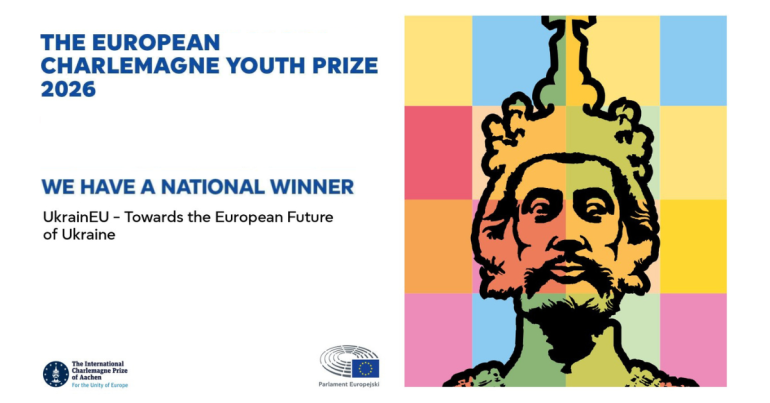
The project “UkrainEU – Towards the European Future of Ukraine,” implemented by the European Union Society, has been selected as the Polish national winner of the European Charlemagne Youth Prize. The initiative brought together students from Poland and Ukraine through policy simulations, academic exchange, and educational activities, creating a space for shared reflection on the future of European integration.
The project was initiated by Jakub Mirkowski, founder and first chair of the European Union Society. It consisted of several interconnected educational and civic initiatives held in Warsaw in 2025. An important role in the project’s development was played by Dr. Iryna Degtyarova, Rector’s Representative for Cooperation with Ukrainian Universities at SGH Warsaw School of Economics, who facilitated academic collaboration with partners from Ukraine and co-developed parts of the program dedicated to dialogue between students from both countries. The project also received support from Prof. Małgorzata Molęda-Zdziech, academic supervisor of the European Union Society.
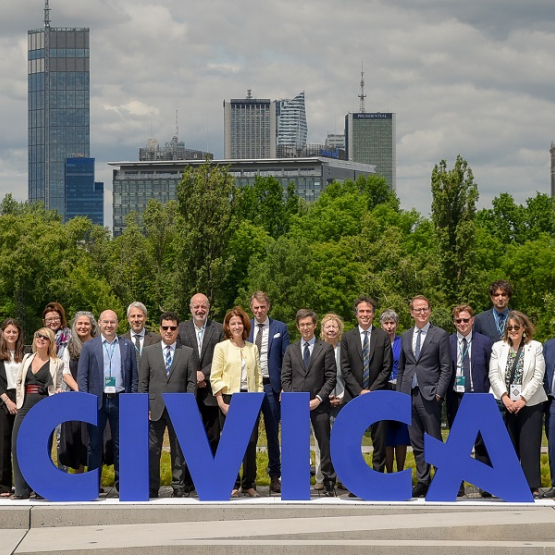
One of the key events of the project was the Model European Union Warsaw simulation, which took place on 7 May 2025 in Warsaw during Poland’s Presidency of the Council of the European Union. The event brought together 40 students from Poland and Ukraine, who took on the roles of national ministers negotiating EU legislation in the Council of the European Union. The simulation, held under the honorary patronage of the European Parliament, the European Commission, and the Minister of Science and Higher Education, allowed participants to experience first-hand the process of negotiation and consensus-building within the European decision-making system.
The project also included a multi-day program of meetings and workshops in Warsaw involving students from the Kyiv School of Economics and Polish universities. Participants took part in expert panels, workshops on European integration and intercultural communication, and institutional simulations at the Europa Experience Centre. The program also featured meetings with professionals involved in activities related to Poland’s Presidency of the Council of the EU, as well as discussions on the role of young people in shaping Europe’s future.
Another important element of the project were educational workshops for secondary school students, conducted by members of the European Union Society. These sessions introduced young participants to the values of the European Union, the process of European integration, and the importance of cooperation between European countries in the context of Ukraine’s future EU membership. In total, more than 140 young people participated directly in the project, which became an example of academic and civic cooperation between students from Poland and Ukraine.
The UkrainEU project was created in response to one of the most significant challenges facing contemporary Europe: the future integration of Ukraine into the European Union. As the national winner of the European Charlemagne Youth Prize, the project will now represent Poland at the European stage of the competition. In the coming months, a representative of the European Union Society will travel to Aachen, Germany, to participate in the winners’ week and the official award ceremony, where national winners from across the European Union will compete for the European podium.
More information about the project is available on the website of the European Union Society.
More information about this year’s laureates is available on the European Parliament’s website.
Monika Wrona