4th NDC Conference 2026: Global Megatrends and the Challenges for Pension Systems
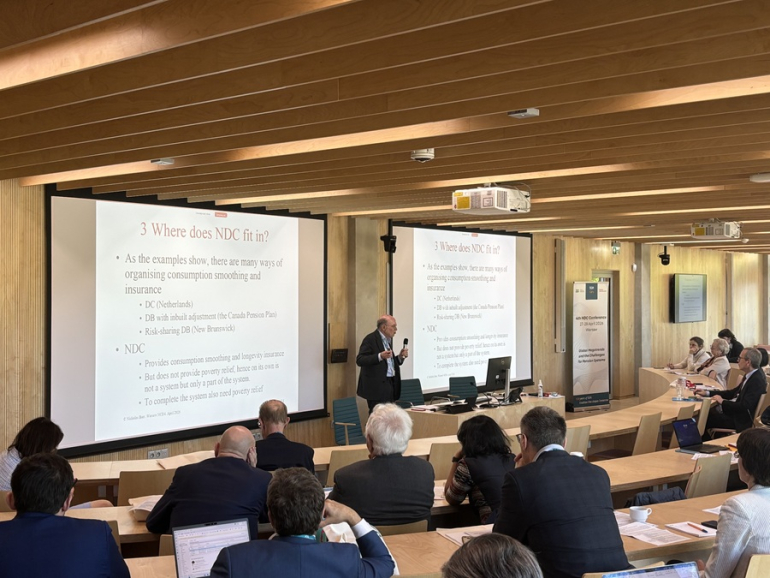
On April 27–28, the SGH Warsaw School of Economics (SGH) hosted the “4th NDC Conference 2026: Global Megatrends and the Challenges for Pension Systems,” the fourth NDC conference dedicated to global megatrends and the challenges facing pension systems in the 21st century. International experts discussed the implementation and operation of NDC (Non-financial Defined Contribution) pension systems in various countries, including Sweden, Poland, and Italy. The conference was held as part of the celebrations marking the 120th anniversary of the SGH Warsaw School of Economics.
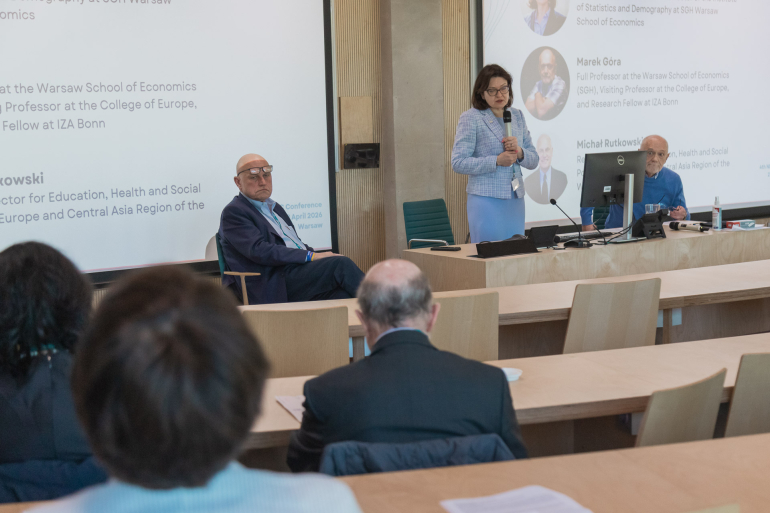
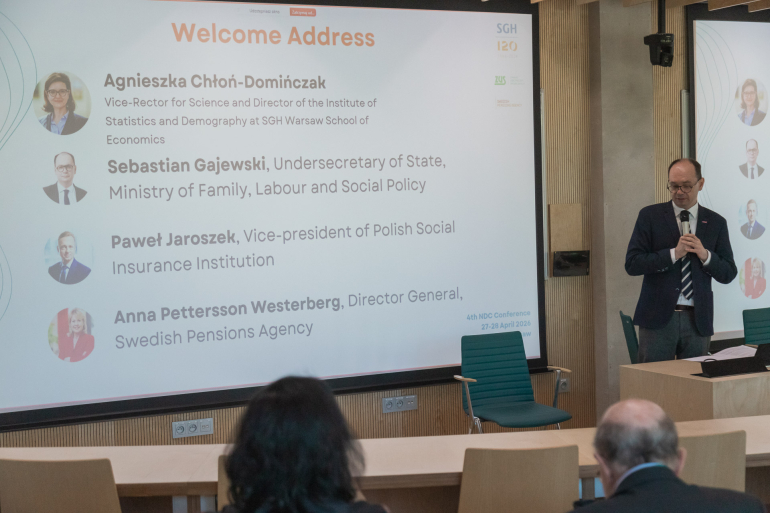
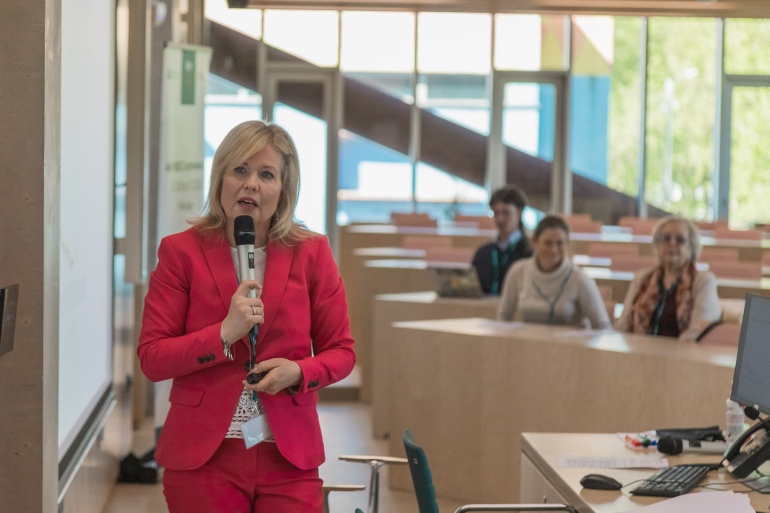
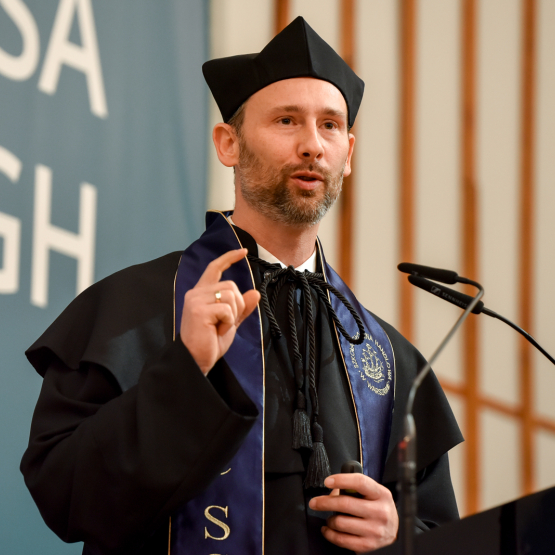
“As Vice Rector for Research at the SGH Warsaw School of Economics, and on behalf of our Rector, I would like to warmly welcome you to Warsaw for the 4th NDC Conference, which is also part of our university’s 120th-anniversary celebrations. We are immensely proud of these 120 years, but also of the fact that during this time we have supported various reforms that have taken place in Poland, including, in particular, the political transformation at the turn of the 1980s and 1990s,” said Dr. Agnieszka Chłoń-Domińczak, Professor at the SGH Warsaw School of Economics, at the conference’s opening ceremony.
“Our faculty members, such as Professor Leszek Balcerowicz, were involved in the major transformation reforms of the early 1990s, which—I believe—some of you may remember, including Professor Nicholas Barr, who is here today and who advised our government at the time. We were also involved in preparing the pension reform in Poland, introducing a national defined-contribution pension system and serving as one of the leaders of these reforms,” noted Prof. Chłoń-Domińczak, pointing to its architects present in the room: Professor Marek Góra and Dr. Michał Rutkowski.
As the Vice Rector for Research emphasized, at the conference experts are addressing “one of the most challenging topics—the functioning of pension systems in times of profound change, including demographic and economic shifts, as well as various megatrends such as digitalization, globalization, and deglobalization, and all the upheavals we are currently experiencing.”
Sebastian Gajewski, Undersecretary of State at the Ministry of Family, Labor, and Social Policy, began by noting that there is no single ideal pension system that would be suitable for all times, all countries, and all societies. “Its optimal form depends on various factors that change over time—demographic, financial, economic, cultural, and political factors,” he noted.
“Therefore, from my perspective as a politician and scholar, there is a clear need for ongoing debate regarding the challenges facing the pension system and the best responses to them. These answers are not universal. For this reason, I am very pleased with the initiative of the Warsaw School of Economics and the social insurance institutions, which I have the pleasure of overseeing, in organizing this conference,” he noted.
The conference included a discussion of the advantages and disadvantages of non-contributory defined contribution (NDC) and contributory defined contribution (FDC) pension plans.
Deputy Minister Gajewski cited public opinion polls which—"despite the objective advantages of defined-contribution pension plans, such as simplicity and transparency — show that the Polish public views defined-benefit pension plans as a fair and desirable pension model.”
“Only 25% of Poles believe that the amount of a pension should depend on the number of contributions paid, while nearly 70% believe it should depend solely on the length of service and earnings during the highest-earning years of one’s working life. More than 25 years after the pension reform based on a defined-contribution pension system, polls continue to show support for defined-benefit pension systems and the belief that this system, although less transparent and harder to understand, guarantees a fair pension,” the deputy minister stated.
“I believe this poses a serious challenge to the discussion on defined-contribution pension systems. As a politician, I must say that the results of these polls truly concern me. (…) I am convinced that any pension system works only if the public accepts it and understands the principles on which it is based,” he assessed.
Deputy Minister Gajewski noted that, as a left-wing politician, he does not trust financial markets and is convinced that elements of the pension system based on individual assessments and profits from financial transactions should be kept to a minimum.
“However, I do not want this discussion to boil down solely to my political views, because this is a scientific discussion, not a political one. I would like to return to the research. Qualitative studies conducted across all segments of Polish society regarding perceptions and expectations of the pension system reveal a consistent pattern: the closer one gets to retirement age, the stronger the conviction that individual financial security in old age is impossible to ensure. According to other respondents, a state-guaranteed pension, based on rules set by the state, should be the primary form of retirement security. And while market-based solutions are economically attractive, we must remember that a society thinking about retirement expects certainty and peace of mind, which financial markets never provide,” he assessed.
Paweł Jaroszek, Vice President of the Social Insurance Institution (ZUS), briefly outlined the institution’s perspective.
“By definition, the public component of the pension system should provide a basic income after retirement. This level is usually lower than expected and does not meet the needs of retirees. The benefits of the pension system can be significantly increased by utilizing various formal and informal elements of social insurance and pension security,” said Jaroszek.
He pointed out that this involves measures to boost fertility, which in the future will finance the consumption of parents and grandparents through their contributions to the pension system, as well as intra-family transfers. He also spoke about solutions such as postponing the decision to retire and extending working life, as well as individual savings, which help balance individual consumption between periods of economic activity and retirement. The Vice President of ZUS emphasized that not only in Poland, but also in the European and global context, demographic processes are in a new state of “a kind of unstable equilibrium.” “The aging of society is a structural change, not a temporary shock,” he stressed.
Anna Pettersson Westenberg, Director General of the Swedish Pensions Agency, assessed that the design of NDC systems and programs is “in some ways superior to other pension systems, primarily because they combine financial stability and a clear incentive to work with the fairness inherent in the principle of lifetime income, long-term stability, as well as the absence of constant political interference in these systems.” “So, I think that by designing them, working with them, and evaluating them, we have created a financially sound pension system that ensures economic security, prosperity, and well-being for millions of retirees in our countries. And that is of great value,” she noted.
She highlighted the impact of rapidly changing external factors on European economies and pension systems. “The Swedish NDC pension system was developed in the 1990s and implemented in the first decade of the 21st century. That was 25 years ago. (...) Since then, the economic, technological, and demographic situation has undergone significant changes. Unfortunately, we are also currently facing a much more difficult, unstable geographical and geopolitical environment, mainly because of Russia’s invasion of Ukraine,” she noted.
As she pointed out, we are currently facing much greater uncertainty regarding economic growth, interest rates, and the labor supply. “Add to that artificial intelligence and digital transformation. This will also fundamentally change the labor market and the way people earn a living,” added Pettersson Westenberg, noting that this will require reforms to pension systems, as well as other social security and social welfare systems.
“So perhaps we will have to completely rethink pension systems for the upcoming generation of people in their thirties and forties. For example, what will happen to the principle of lifetime income if there are prolonged periods during which we have no income due to artificial intelligence and digitization? Will this principle of lifetime income be difficult to maintain? Or will it be more important than ever?” she asked.
The Director General of the Swedish Pensions Agency emphasized that, despite all these challenges, it is essential to maintain pension systems and strong institutions like pensions, as they serve our societies very well. “I believe that the key to success is to continue developing and implementing new reforms to adapt to today’s world. I think this is crucial for the success of the pension system,” she noted.
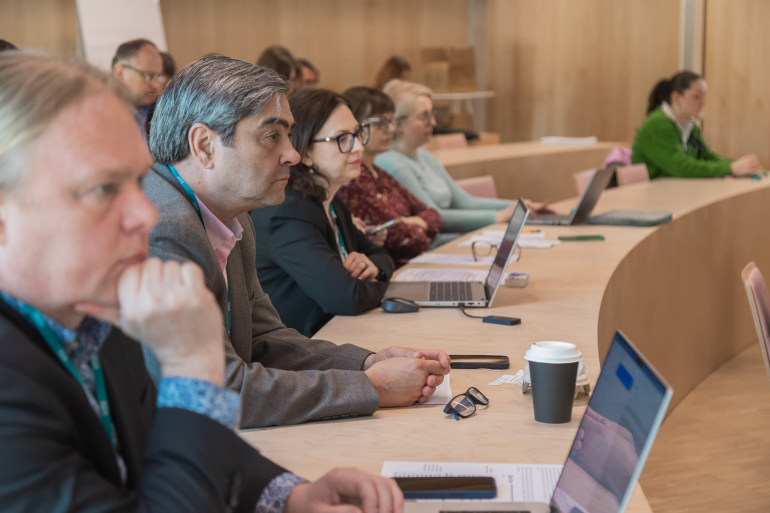
At the conference, speakers discussed demographic changes, population aging, the situation in labor markets, the gender perspective, and the long-term financial stability of social security systems.
According to experts, the 21st century presents us with unique challenges that differ significantly from those of the 20th century, particularly in the realm of pensions.
Demographic changes have altered the population structure, rendering traditional pension systems inadequate. Developed countries that have completed their demographic transition are now facing a shrinking working-age population, which reduces the potential tax and contribution base, and a growing number of retirees—due both to the retirement of the baby boom generation and to rising life expectancy. This imbalance requires either a reduction in current consumption by the working-age population, lower benefits for retirees, or a combination of both—which experts view as a grim prospect.
Fundamental changes are therefore necessary to maintain intergenerationally fair welfare states. Supportive strategies, such as immigration, increased productivity, and extending working lives, can help mitigate this situation but cannot reverse the trend. Even with a large influx of immigrants, the population decline resulting from birth and death rates will remain significant, experts say. Encouraging people to stay in the labor market longer could increase the number of workers and reduce the number of retirees, which may help mitigate some of the effects of an aging society. However, this requires labor markets, employers, and workers to adapt to the growing share of workers aged 60 and older, which presents a multifaceted challenge, experts caution.
Demographic trends are difficult to manage, and even well-designed policies can have only a marginal impact. Therefore, countries must adapt their institutional structures to current demographic realities. In the 20th century, pension systems were designed with a growing population in mind and benefited from the demographic dividend, but in the 21st century, they must adapt to a declining population. This requires new ideas and adjustments to existing systems.
One approach to these challenges, particularly in developed countries, is an NDC-based pension system.
NDC systems ensure transparency by providing clear and understandable information about future outcomes. This helps manage expectations, even when difficult messages regarding payouts and the duration of employment must be communicated. This transparency is both an advantage and a disadvantage, as it allows expectations regarding the pension system to be managed in advance.
The NDC concept was developed in the late 20th century and has been implemented to varying degrees in several countries, including Sweden, Poland, Italy, Latvia, and Norway. The transparency of NDC systems means that policymakers do not have to implement difficult changes, as the system itself adapts to the labor market and demographic shifts and regularly provides necessary information to its participants. In this way, difficult news is communicated in advance, and it is better to disclose it than to hide it, as is the case in traditional systems.
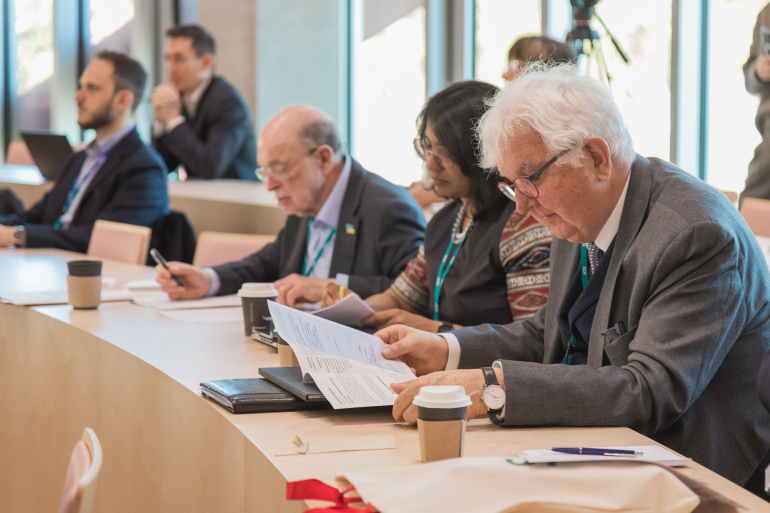
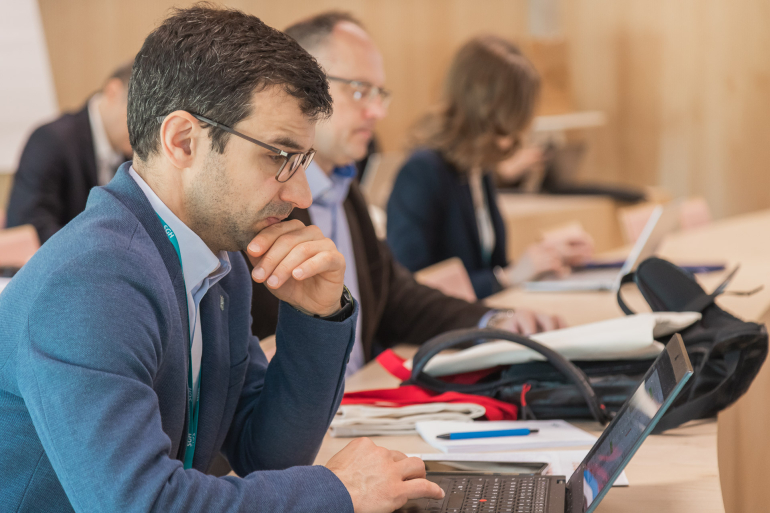
During the two-day conference at the SGH Warsaw School of Economics (SGH), international experts changed views in thematic sessions and panel discussions. The keynote lecture was delivered by Prof. Peter Diamond, a Nobel laureate. The conference was co-organized by ZUS, with the Swedish Pensions Agency serving as a partner, and was a continuation of previous events held in Sandhamn, Stockholm, and Rome.
The conference is part of the celebrations marking the 120th anniversary of the SGH Warsaw School of Economics. The events of the anniversary year at the SGH Warsaw School of Economics combine various activities and initiatives that strengthen the SGH community, those associated with it, and its supporters, as well as commemorative symbolism. From the inauguration on October 8, 2026, throughout the 2025/2026 academic year, until the conclusion of the celebrations in December 2026, the university campus will host a series of official ceremonies, as well as academic, student, cultural, sporting, and partnership events, all of which will underscore that SGH is a modern and dynamically developing university, open to the challenges of the contemporary world.
Małgorzata Kidawa-Błońska, Marshal of the Senate of the Republic of Poland, has assumed honorary patronage of the SGH 120th anniversary celebrations. Orlen S.A. is the patron of the SGH anniversary, while PZU S.A. and Santander Bank are strategic partners. Media patronage for the anniversary events has been provided by: the Polish Press Agency, the daily newspaper “Rzeczpospolita,” “Dziennik Gazeta Prawna,” “Puls Biznesu,” money.pl, TVP3, and Radio Kampus.