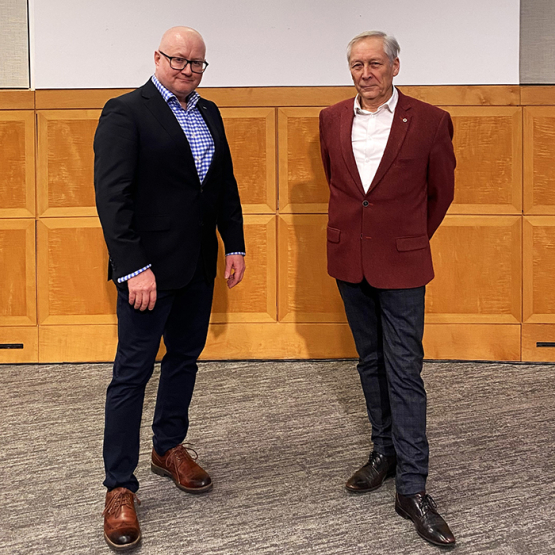
Working Breakfast with the Leadership of AACSB, the Ministry of Science and Higher Education, and SGH Authorities
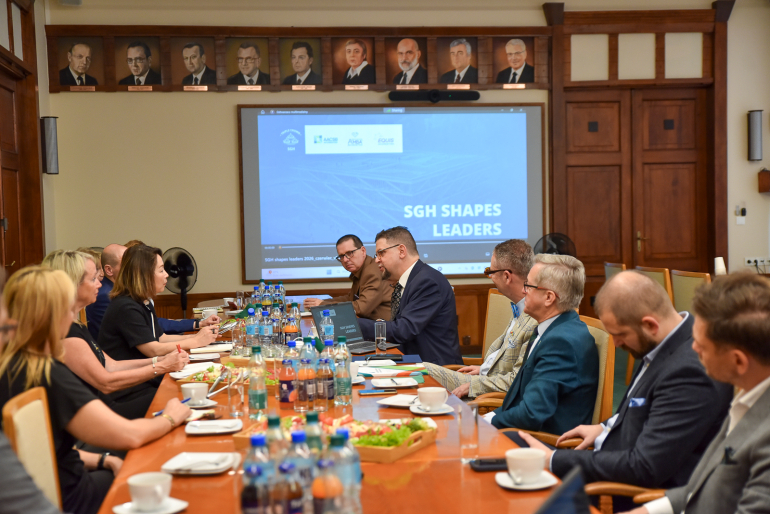
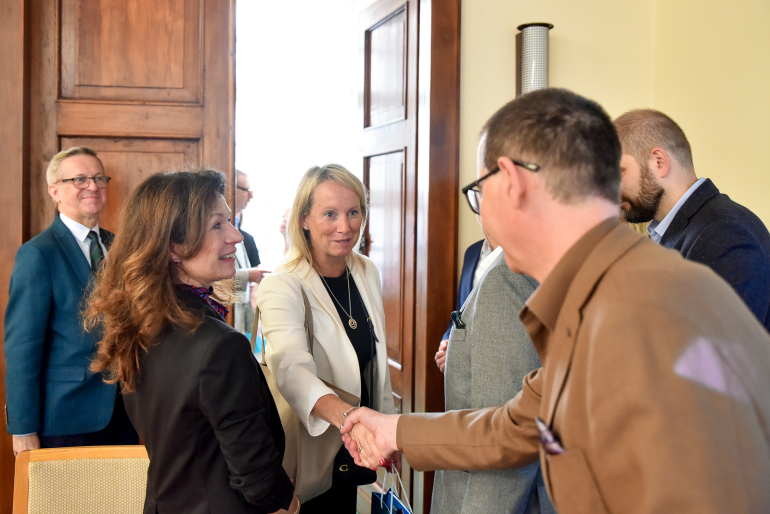
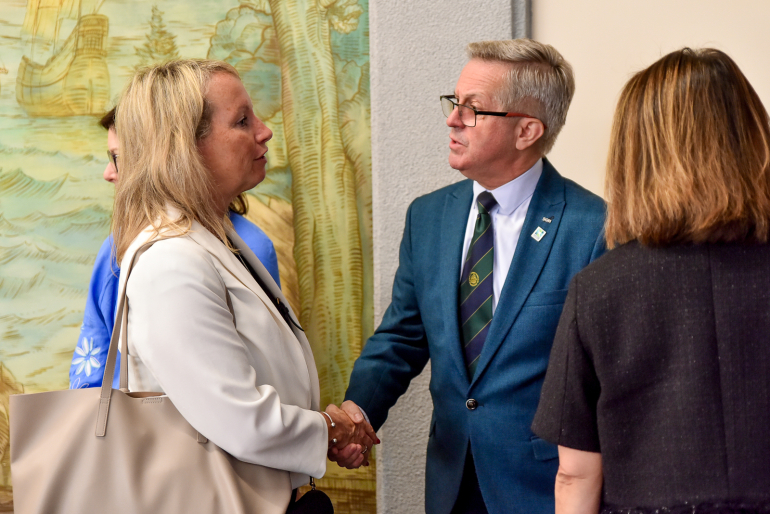
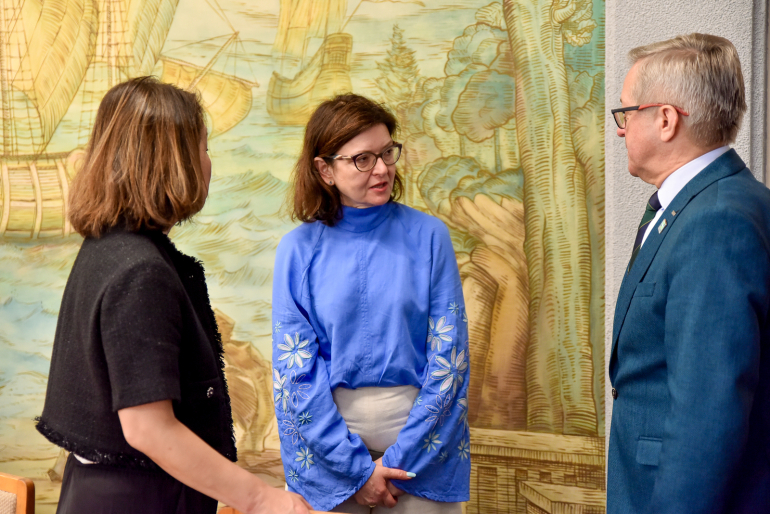
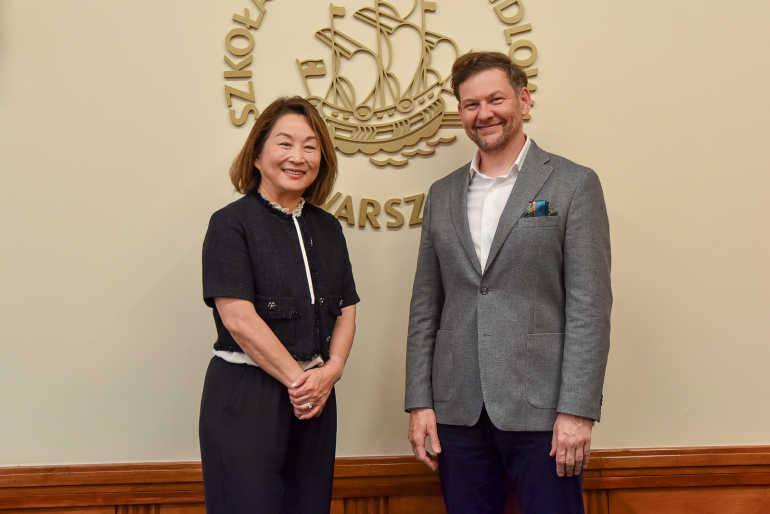
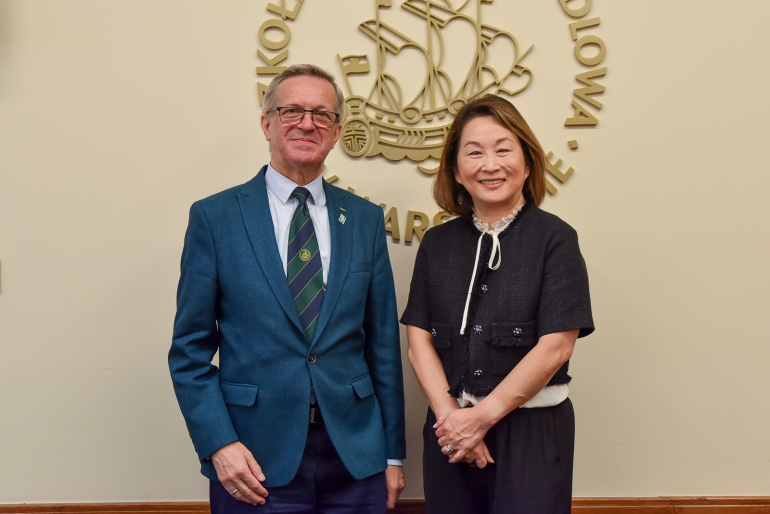
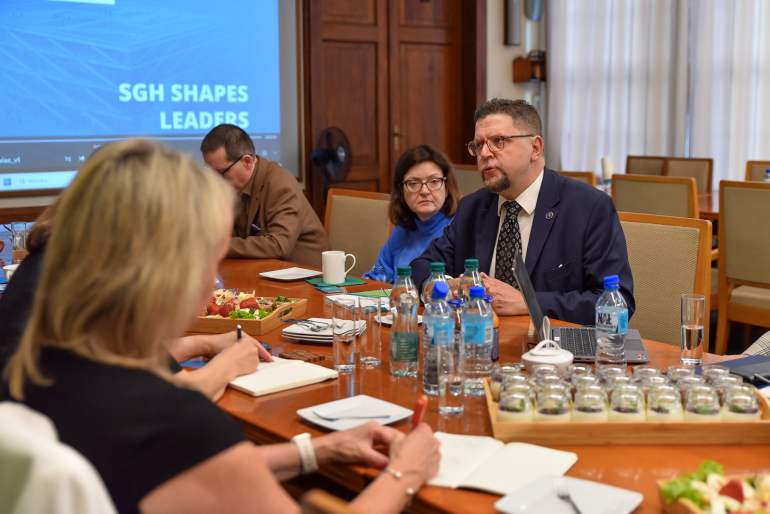
On 22 June 2026, SGH Warsaw School of Economics hosted a working breakfast devoted to current challenges and development directions for business schools. The meeting was attended by representatives of the senior leadership of AACSB International: President and Chief Executive Officer Lily Bi and Executive Vice President Eileen McAuliffe, as well as Andrzej Szeptycki, Undersecretary of State at the Ministry of Science and Higher Education. The meeting was hosted by the Rector of SGH Warsaw School of Economics, dr hab. Piotr Wachowiak, prof. of SGH.
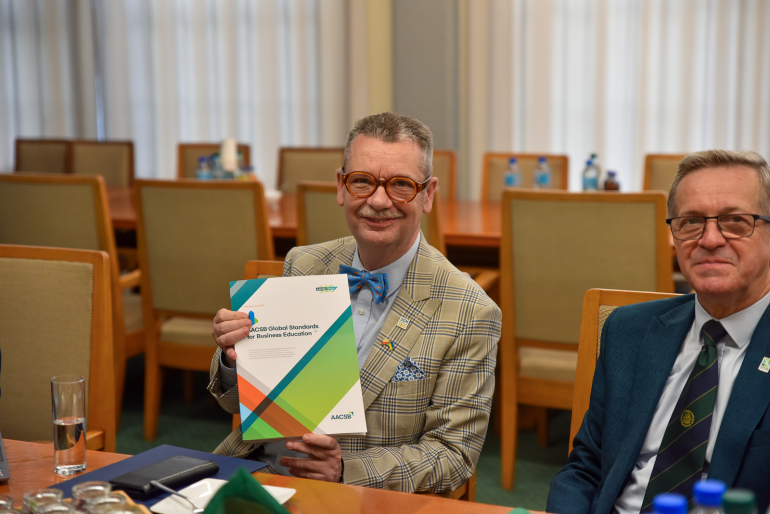
The discussions focused on key contemporary issues relating to the operation and development of business schools worldwide. The AACSB representatives briefed the hosts on the latest AACSB accreditation standards and their significance for educational quality, the governance of business schools, and their international development. An important theme of the discussions was the role of impact within the AACSB standards, understood as the tangible influence of research, its practical application, and the effective dissemination of knowledge beyond the strictly academic environment. It was emphasised that, in an era of widespread access to artificial intelligence-based tools, the production of knowledge itself will become increasingly less costly and easier to achieve. Consequently, greater importance will be attached to the ability to select information appropriately, interpret it, evaluate it critically, apply it in practice, and disseminate it responsibly.
In this context, participants also discussed the evaluation of research and academic activity, particularly the ways in which impact might be incorporated into assessment systems. Attention was drawn to the need for a more flexible model that would encompass not only scholarly publications but also the outcomes of research oriented towards economic and societal practice. As one possible direction, reference was made during the discussion to the example of Australia, where 25% of the assessment was based on impact, 25% on securing research funding, and 50% on publications.
The meeting also addressed issues concerning the evaluation of academic staff, the principles governing the recognition of publication achievements, and the potential for increasing the flexibility of the current system.
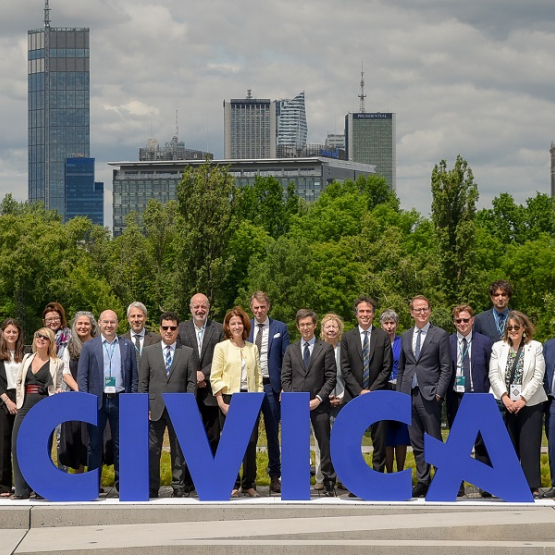
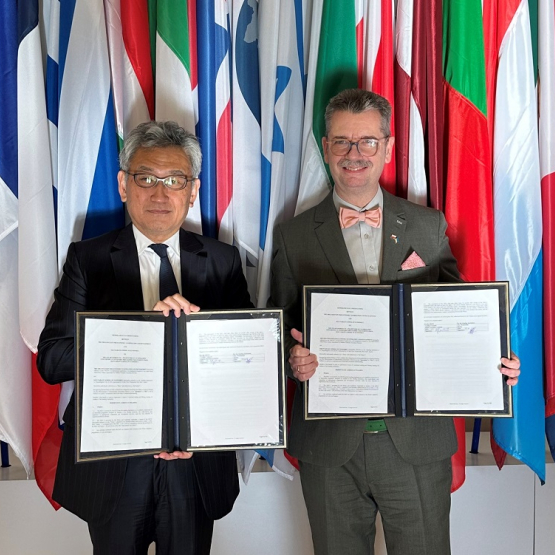
A significant part of the meeting was devoted to the internationalisation of business schools and universities of economics. It was emphasised that international accreditations support not only student and staff mobility but also the development of lasting institutional relationships, joint projects, and long-term academic partnerships. In this context, reference was also made to the CIVICA – The European University of Social Sciences initiative. Participants also discussed solutions adopted in other countries, citing the example of Taiwan, where holding AACSB accreditation exempts an institution from the requirement to undergo local accreditation. At the same time, it was noted that approaches to the recognition of international accreditations vary across countries.
During the discussion on the Polish higher education system, attention was drawn to the growing number of international students. Their share in Poland is currently estimated at approximately 8–9%, representing an increase from several thousand to more than 100,000 over the past dozen or so years. Participants emphasised the need for a more conscious and strategic approach to attracting international students and to drawing on insights derived from global experience. It was also noted that Poland attracts international students who, upon completing their studies, often wish to remain in the country and pursue employment here; within the European Union, a similar model of attracting and retaining talent can currently be observed in Ireland.
Considerable attention was also devoted to the need to maintain flexibility in educational programmes. It was pointed out that the pace of technological, economic and social change is now so rapid that a degree programme may partially lose its relevance even within a standard three-year cycle of study. Consequently, increasing importance should be attached to developing the ability to ask the right questions, think critically, understand complex problems, and adapt to rapidly changing circumstances.
In this context, the implications of advances in artificial intelligence for business schools and the education of future leaders were discussed extensively. It was emphasised that alongside traditionally understood cognitive intelligence (IQ), increasing importance is being attached to EQ (emotional intelligence) and AQ (adaptability quotient). The ability to anticipate change, provide vision, exercise responsible leadership, set strategic direction, and assess the consequences of decisions appropriately will remain, to a large extent, distinctly human competencies. At the same time, attention was drawn to the fact that organisational leaders currently operate under strong pressure to optimise costs, which further accelerates the implementation of technological solutions and automation.
The meeting also presented initiatives undertaken by SGH Warsaw School of Economics in the field of artificial intelligence, including the development of the AI Lab, reflecting the School’s recognition of the importance of this technology for the future of education and research. The discussion also covered the ways in which AACSB supports business schools in developing future-oriented competencies, including those related to AI. Opportunities for greater involvement of university representatives in AACSB activities were also highlighted, including through volunteering and participation in the work of the Regional Advisory Board.
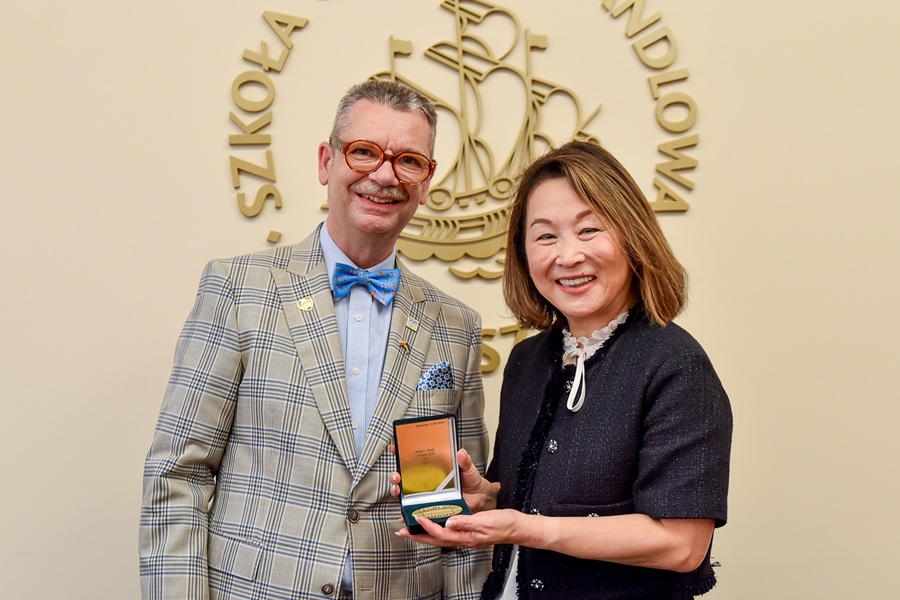
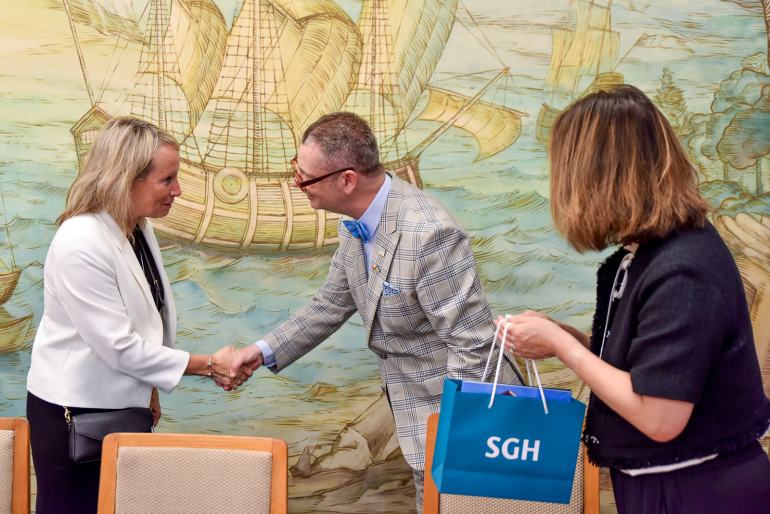
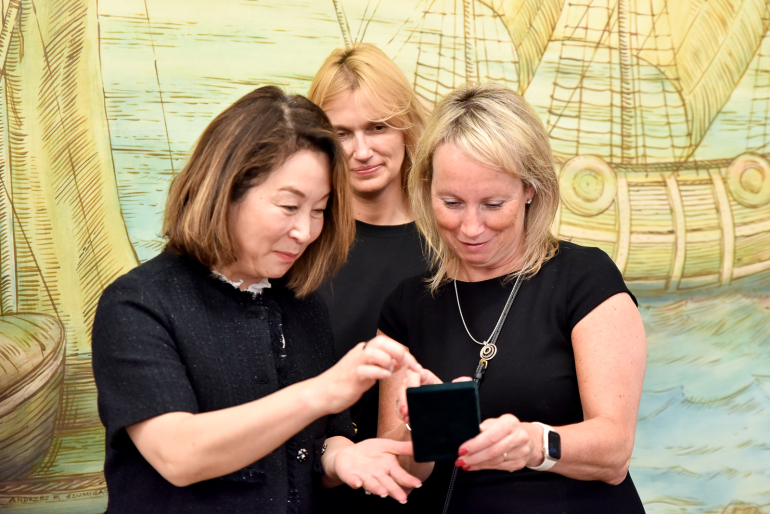
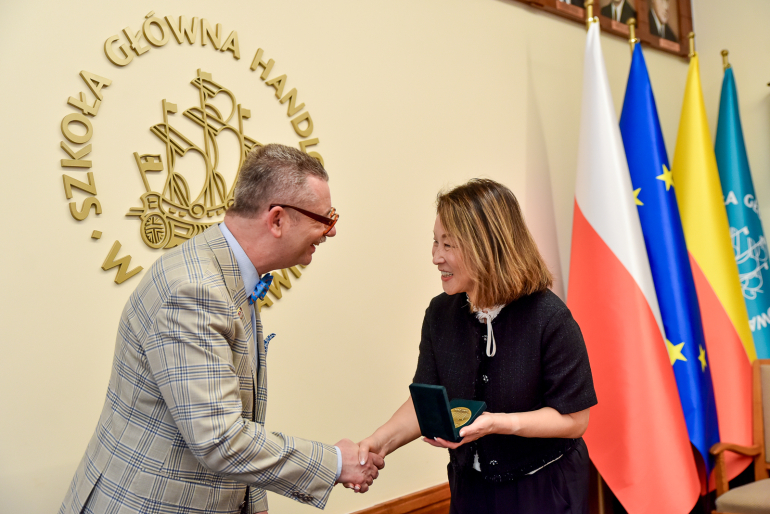
In the concluding part of the meeting, the Rector of SGH Warsaw School of Economics, Professor Piotr Wachowiak, presented AACSB President and Chief Executive Officer Lily Bi with a commemorative medal marking the 120th anniversary of SGH, celebrated this year.
dr hab. Marcin Wojtysiak-Kotlarski, prof. of SGH, head of AACSB, EQUIS and BGA accreditation projects and BSIS Impact certification projects
Photos: Piotr Potapowicz, SGH