The SGVH-led FAIRGens project officially approved for funding by the European Commission
The international research project ‘Shaping Fair and Viable Intergenerational Policies for the Future’ (FAIRGens) has been approved for funding under the prestigious Horizon Europe programme as part of the competition “Intergenerational fairness in the context of demographic changes in the EU”. The information about the EC’s decision was made public on the eve of European Day of Demography, which we are celebrating today, on 4 February.
The SGH Warsaw School of Economics, at origins of the project, will lead a consortium of 13 prestigious institutions from 11 European countries. It gathers universities and research institutes from Poland, Italy, Greece, Germany, Austria, Sweden, Spain, Slovakia, Slovenia and Liechtenstein.
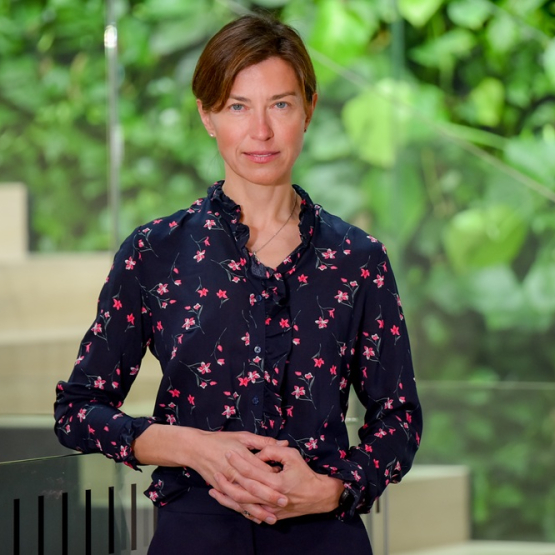
The aim of the project is to ensure intergenerational justice in the face of dynamic demographic changes, such as population ageing, lower fertility rates and the transformation of family structures. The project will be led by Professor Agnieszka Chłoń-Domińczak, Vice Rector for research and Director of the Institute of Statistics and Demography at the SGH Warsaw School of Economics.
"The issues mentioned above are among the most important challenges facing Europe and the world today. Through the FAIRGen's project, SGH wants to take part in the search for answers to the question of how to ensure intergenerational justice in ageing and rapidly changing populations" – emphasised Professor Agnieszka Chłoń-Domińczak in an interview with “Gazeta SGH”. In her opinion, the project will be of great importance for shaping public policies in European Union countries.
“FAIRGens supports the development of EU strategies in areas such as social resilience, just transition, social and demographic policies, and intergenerational balance, and its results will go directly to decision-makers and institutions such as the Joint Research Centre and Eurostat,” – pointed out Professor Chłoń-Domińczak.
As she explained, "the project, which will be implemented between 2026 and 2029, aims to:
• develop scientific foundations and tools for designing policies that promote intergenerational balance,
• deepening knowledge about intergenerational transfers – financial, time, including care – in the public and private sectors,
• creating indicators for monitoring intergenerational justice and scenarios for its future development,
• developing recommendations in the area of public policy for national and European institutions".
Key components of the project:
As part of FAIRGens, the following elements will be developed:
1. Intergenerational Justice Index
A new index which enables the measurement of intergenerational justice levels across European countries, taking into account economic factors, access to public services, social relations, and political participation.
2. European Intergenerational Transfer Accounts
Advanced analyses of public and private transfers between generations, which are made using three international research infrastructures in which SGH participates: SHARE – Survey of Health, Ageing and Retirement in Europe, GGS – Generations and Gender Survey, and NTA – National Transfer Accounts.
3. Microsimulation-Based Forecasts
Using the microWELT microsimulation model developed by Austrian project partners, the research plans to explore future scenarios for intergenerational transfers, well-being, and the fiscal situation of states under different political and demographic configurations.
4. Agora – A Platform for Social Dialogue
An innovative digital tool enabling the co-creation of public policies by researchers, policymakers, civil society organizations, and citizens. Agora will serve as a space for consultations, analyses, and joint development of policy recommendations.
Prof. Agnieszka Chłoń-Domińczak envisions that new concepts and indicators of intergenerational justice will be developed as part of the FAIRGens project. "We will analyse intergenerational flows – income, wealth, time and care, use advanced microsimulations to forecast future development scenarios, engage decision-makers, citizens and researchers through the innovative Agora platform, and participate in the co-creation of the European Action Plan for Intergenerational Justice" – said Professor Chłoń-Domińczak.
"Our goal is to create a solid, evidence-based foundation for policies that protect both current and future generations – strengthening resilience, cohesion and sustainable development across Europe. I would like to thank all our partners for their commitment and professionalism. I look forward to working together on this ambitious project! Together, we are shaping a fair future for all generations" – said FAIRGens project coordinator Prof. Agnieszka Chłoń-Domińczak.