"Space in Economics: Social Determinants of Economic Development" – 3rd International Scientific Conference
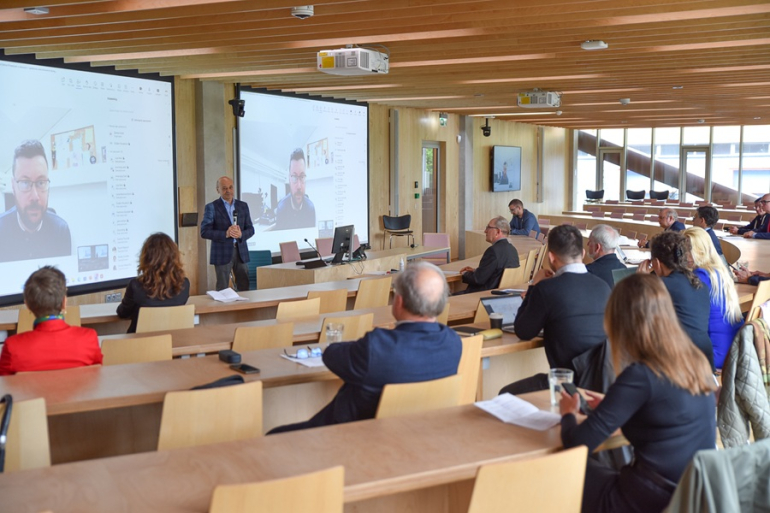
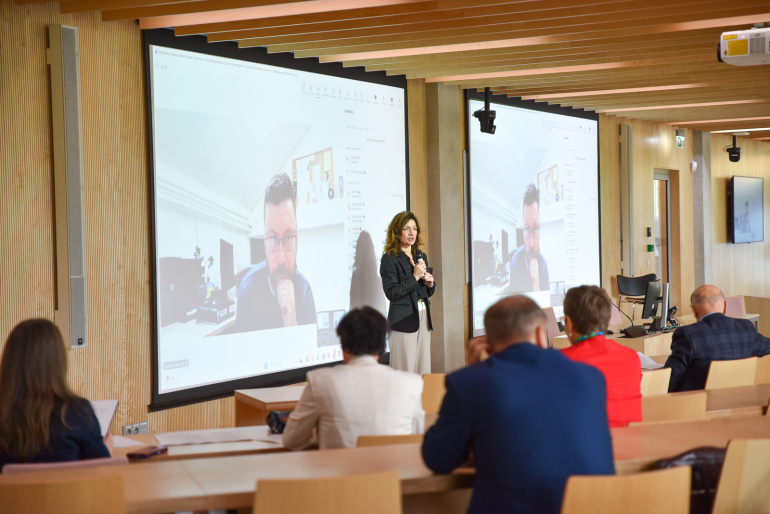
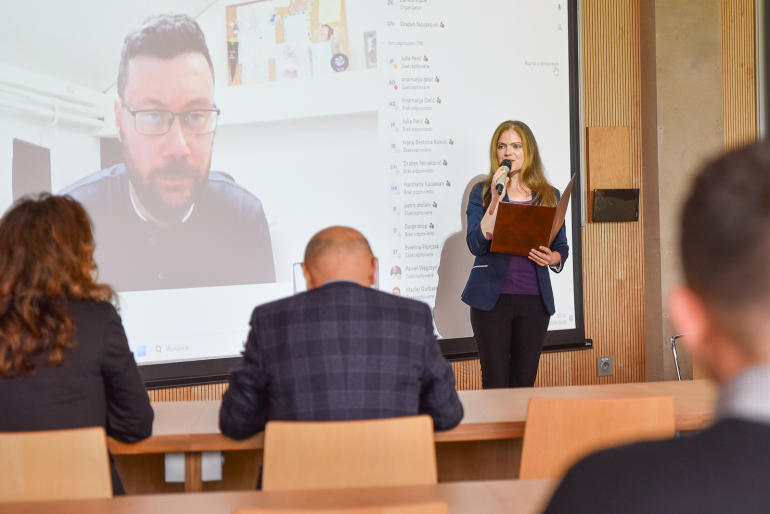
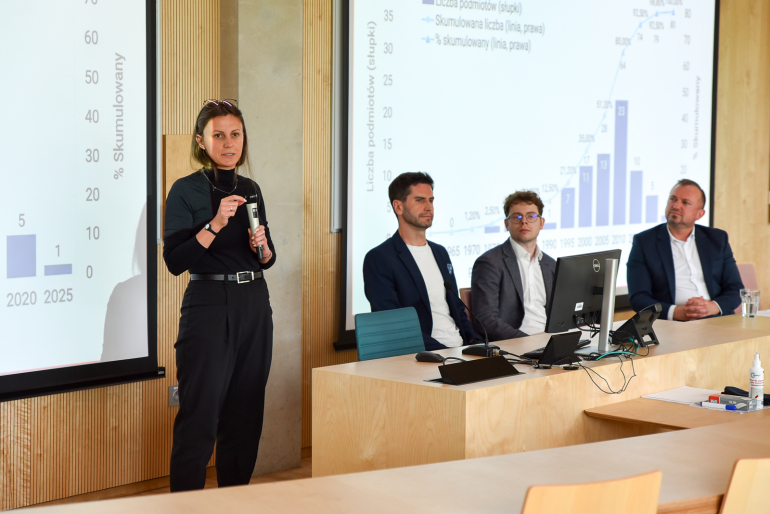
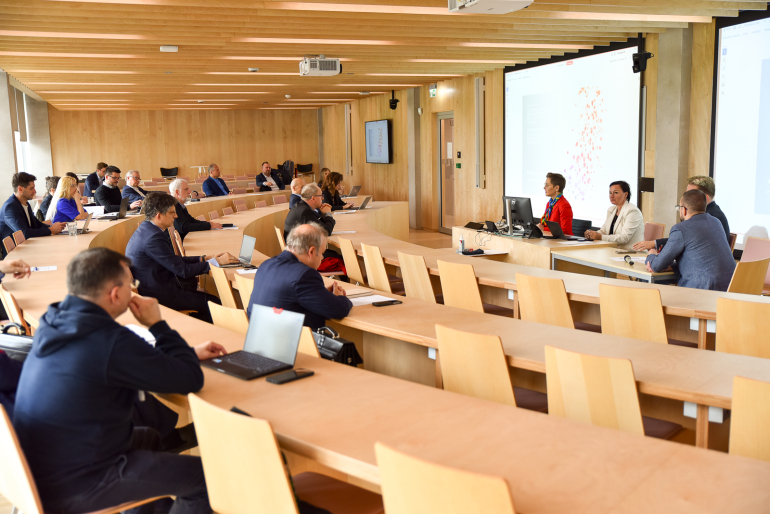
On 15 June 2026, the SGH Warsaw School of Economics hosted the 3rd International Scientific Conference, "Space in Economics – Social Determinants of Economic Development". The conference brought together representatives of Polish and international academic institutions to discuss contemporary challenges of economic development from spatial, social, and institutional perspectives.
The event was officially opened by Professor Gabriel Główka, Dean of the Collegium of Business Administration, and Professor Dorota Niedziółka, Vice-Rector of SGH and Head of the Department of Economic Geography.
The conference programme comprised five thematic sessions. The first panel, "The Economy in New Dimensions – Between the Metaverse and Creative Ecosystems," chaired by Professor Paweł Kubicki, featured a presentation by Professor Rafał Kasprzak on the social and business determinants of the metaverse as a new dimension of economic space. Dr Anna Masłoń-Oracz discussed strategic value creation in creative ecosystems from the perspective of UNESCO, while Dr Marta Ziółkowska presented the concept of social franchising as a model combining social objectives with market efficiency.
The second panel, devoted to regions, accessibility, and public policies, was chaired by Professor Tomasz Rachwał. Professor Jacek Brdulak, Professor Dariusz Kotlewski, and Dr Paweł Węgrzyn presented an analysis of the social dilemmas surrounding spatial productivity in the context of increasing financialization. Professor Aldona Piotrowska and Dr Agnieszka Pacut shared experiences related to the operation of energy cooperatives in municipalities. Dr Michał Pienias discussed the management of post-industrial regions using the example of Wałbrzych, Dr Piotr Pawlak examined the issue of transport exclusion in Poland in the context of public road transport, and Dr Zofia Szweda-Lewandowska presented the principles of designing an inclusive support ecosystem for elderly care.
The third panel, chaired by Professor Paweł Kubicki, focused on digital transformation and responsible development. Dr Anna Waligóra presented the role of digital platforms in social entrepreneurship, Dr Rafał Boguszewski and Mr Maksymilian Koc discussed research findings on the SME sector in the face of sustainable development challenges, Dr Dariusz Prokopowicz explored the potential applications of artificial intelligence in the social economy and management, while Mr Tomasz Gardziński highlighted the importance of social entrepreneurship innovation for the technological development of the economy.
Following the break, discussions continued with the panel "Locality, Community, and Social Entrepreneurship as Drivers of Development," chaired by Dr Michał Jasiński. Dr Agnieszka Pacut and Dr Norbert Laurisz discussed contemporary pathways of innovation in social entrepreneurship, Dr Izabela Grabowska and Dr Szymon Wójcik presented new research findings on measuring social return on investment in social enterprises, Dr Pertit Dollani shared the experiences of social enterprises in Albania, and Dr Ewelina Florczak examined the cross-sectoral dimension of social innovation.
The conference concluded with the international English-language panel, "Spatial Perspectives on Sustainable Development and Contemporary Business Models," chaired by Dr Ewelina Florczak. Dr Harshana Kasseeah presented research findings on the impact of gender diversity on business innovation. Professor Ivana Bestvina Bukvić analysed the spatial differentiation of the performance of Croatian IT companies. Professor Anamarija Delić and Professor Sunčica Oberman Peterka discussed the integration of the United Nations Sustainable Development Goals (SDGs) into business models and higher education. Professor Julia Perić examined the role of corporate social responsibility and social entrepreneurship in addressing regional challenges, while Dr Dražen Novaković presented the importance of ESG strategies as a foundation for building resilient and responsible business models.
The third edition of the conference confirmed the growing importance of interdisciplinary research on the social determinants of economic development. Its comprehensive programme and the participation of scholars from numerous Polish and international academic institutions created an excellent platform for exchanging experiences and presenting research on digital transformation, public policies, social entrepreneurship, and sustainable development. Once again, the event demonstrated that collaboration within the academic community remains essential for addressing the complex challenges facing contemporary economies.
The conference was organized by the Department of Economic Geography in cooperation with the Institute of Value Management, the Institute of Social Economy in Collegium of Socio-Economics, and the Institute of Economics of the University of Osijek (Croatia).